Wageningen University and Research
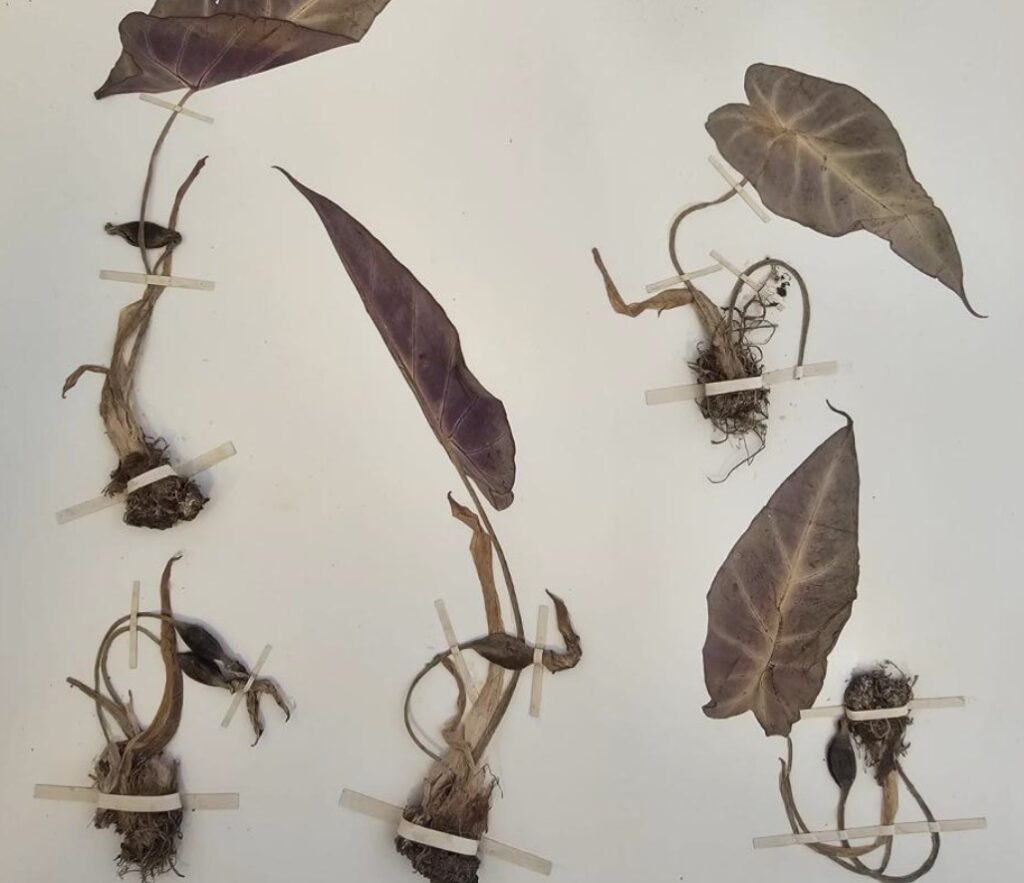
Edible aroids (plants from the family Araceae) are among the top five most cultivated tuber crops globally, but their consumer acceptance is hindered by extreme acridity Acridity is caused by aroids sap that severely irritate the throat, lips or skin if not correctly processed. However, no in-depth studies exist on acridity in edible aroids, how to diminish it and its connection to human-mediated dispersal. In our previous study (Fang et al., 2024), we collected accessions from the Dutch market, for conducting phenotyping and ploidy analyses.
To further investigate the diversity of these accessions, we are currently using molecular data to identify the genotypes with different levels of acridity. In this project, we aim to combine RBGK (the Royal Botanical Gardens, Kew) accessions of edible aroids from different continents to 1) phenotype and genotype RBGK edible aroids accessions; 2) compare RBGK and Dutch accessions from different continents for their morphology and genetics among; 3) reveal edible aroids acridity variation and its genetic basis at intraspecific, interspecific, generic and family levels; 4) decipher domestication history of edible aroids and its relation with acridity through comparative and population studies among accessions across the world; 5) progress (unclear) in uncovering the domestication origin of taro and other edible aroids; 6) contribute to edible aroids wild relative conservation, food safety, edible aroids acceptance, production, trade and consumption.