Universiteit Utrecht
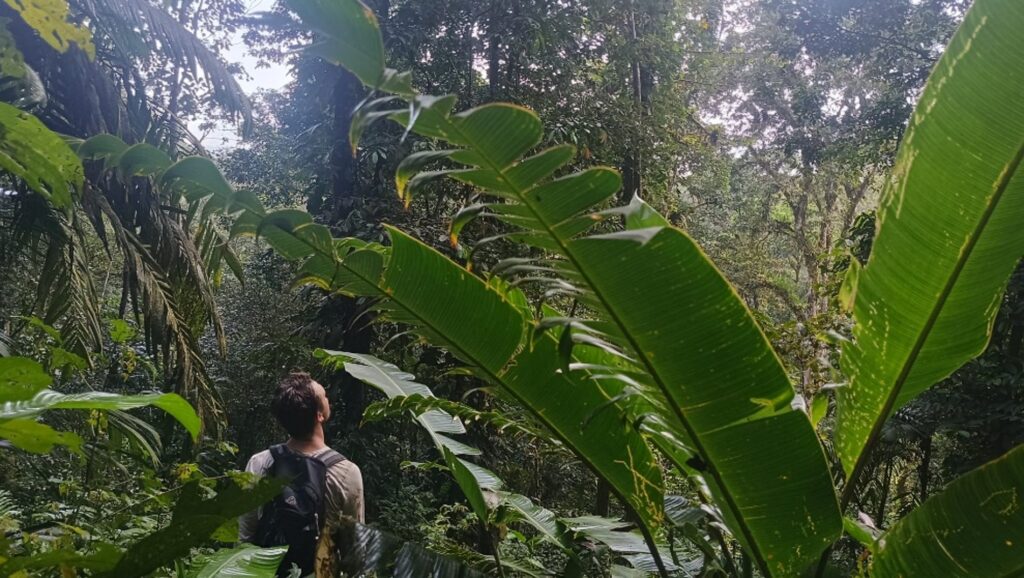
In the Amazon rainforest of French Guiana, as part of the long-running FoRAD project, we studied forest gaps and their role in forest regeneration. Within our experimental plots, we investigated plant growth and – diversity, and herbivory through browsing damage and camera traps. We also examined the leaf traits and chemical composition of some of the most frequently browsed plant species. Together with the French Biodiversity Office (OFB) and Foundation Trésor, our work contributes to a broader effort to understand how forest diversity develops from these small “nurseries” of new rainforest, and ultimately how this diversity can be safeguarded for the future.
As an additional part of this ongoing research, I explored whether satellite imagery could help determine the age of individual forest gaps. By combining GPS locations from our fieldwork with satellite data, we investigated whether their development could be traced over time. Although accurately determining their age remains challenging, this approach may provide a useful tool with more precise GPS-points collected by an other team. I wish the next campaign all the best. I am excited to see what our results will ultimately reveal about the processes shaping tropical forest regeneration and diversity!